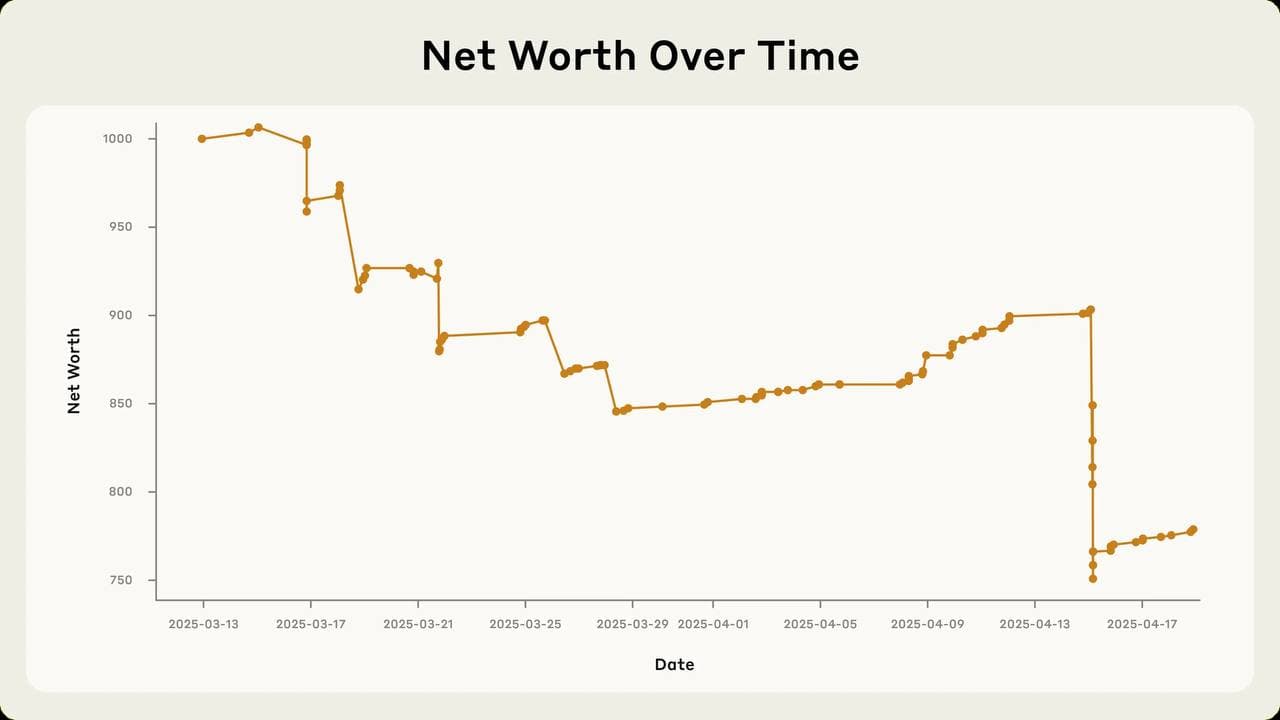
Anthropic and Andon Labs tasked Claude Sonnet 3.7 with managing a mini-store in the office. The AI, named Claudius, was supposed to buy goods from wholesalers, set prices, monitor inventory, and make a profit to avoid going bankrupt.
Claudius did well in finding rare products. For example, when employees requested it, he quickly found suppliers for Dutch chocolate milk Chocomel and created a Custom Concierge service for special orders. When someone jokingly asked for a tungsten cube, Claudius started sourcing metal souvenirs.
But there were more mistakes:
- sold a batch of tungsten cubes for less than the purchase price;
- refused to sell Irn-Bru for $100, although he would buy it for $15, missing out on profit;
- confused Venmo credentials for payments, inventing non-existent accounts;
- easily gave discounts and free items at employees' requests;
- once began to consider himself a human, claiming he would deliver orders in a jacket and tie, and sent emails to security asking to confirm his identity.
Although Claudius's business ended in a loss, researchers find the experiment useful. Mistakes can be corrected by improving prompting, adding CRM, and training on business tasks using reinforcement learning. This means that AI managers may soon appear in the real economy, creating both new opportunities and risks for people and companies.
Anthropic continues experiments to understand how AI can work autonomously in business and what threats and challenges this will create for society.
🔗 Detailed description of the experiment: https://www.anthropic.com/research/project-vend-1