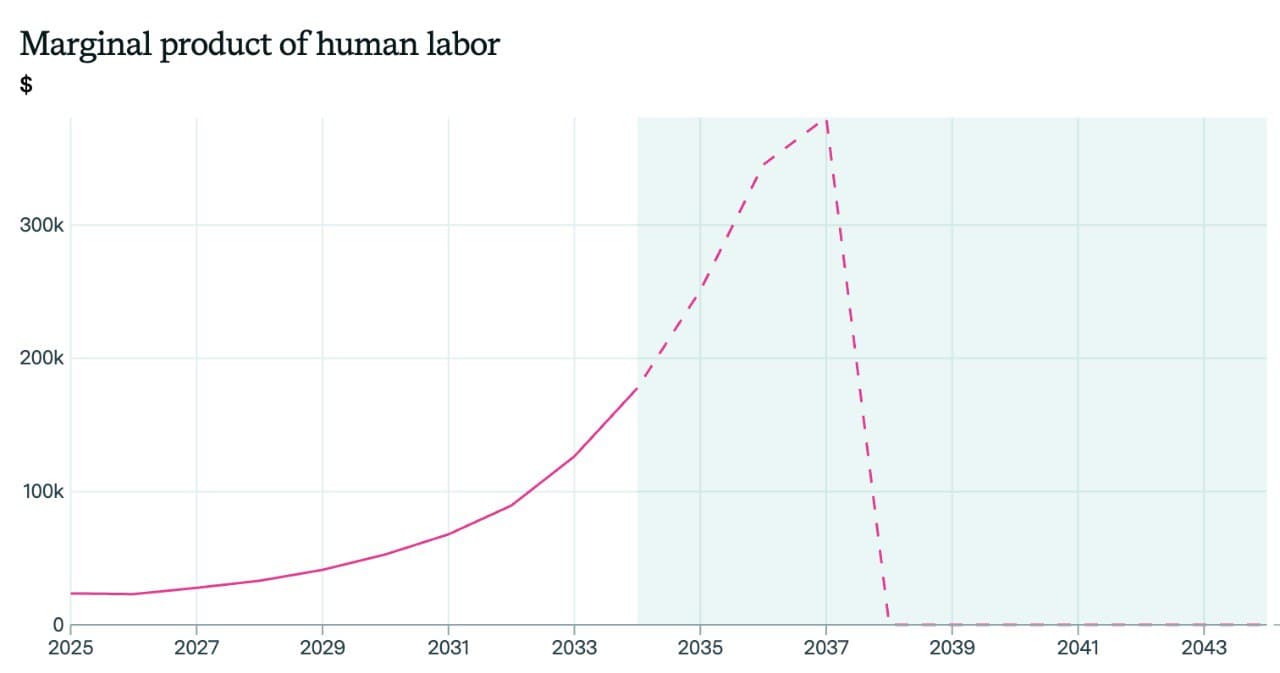
📉 Partial automation increases employment. Full automation destroys it.
Benjamin Todd wrote an interesting thread about how automation affects jobs. When ATMs appeared, the number of clerks per branch decreased, but the number of branches increased, and employment in the banking sector grew. People started spending less time counting money and more time interacting with clients.
But then online banking came along. And the number of clerks began to fall.
Now AI can play the same role. So far, data science shows growth: +20% in 2023, despite AI handling statistics well. However, professions like secretaries and cashiers are shrinking.
Conclusion: automation initially increases productivity, and thus employment and salaries. But when it reaches 100%, employment and salaries drop to zero. The difference between 99% and 100% automation is a chasm.
We are not there yet. But it's already time to learn skills that complement AI rather than compete with it. These will become the bottleneck and will be the most highly paid.
#ai #automation #jobs #productivity #humanity