📚 Apoorv Agrawal, who led Stanford MS&E 435: Economics of the AI Supercycle, published a summary of the entire course in an article.
This year, I completed the course entirely - each week we discussed the next lecture in a Lecture Club call and I posted notes and reflections here after each meeting.
Agrawal also summed up - he wrote an article about what he learned himself while leading the course. It's worth reading in full, but here are the main points.
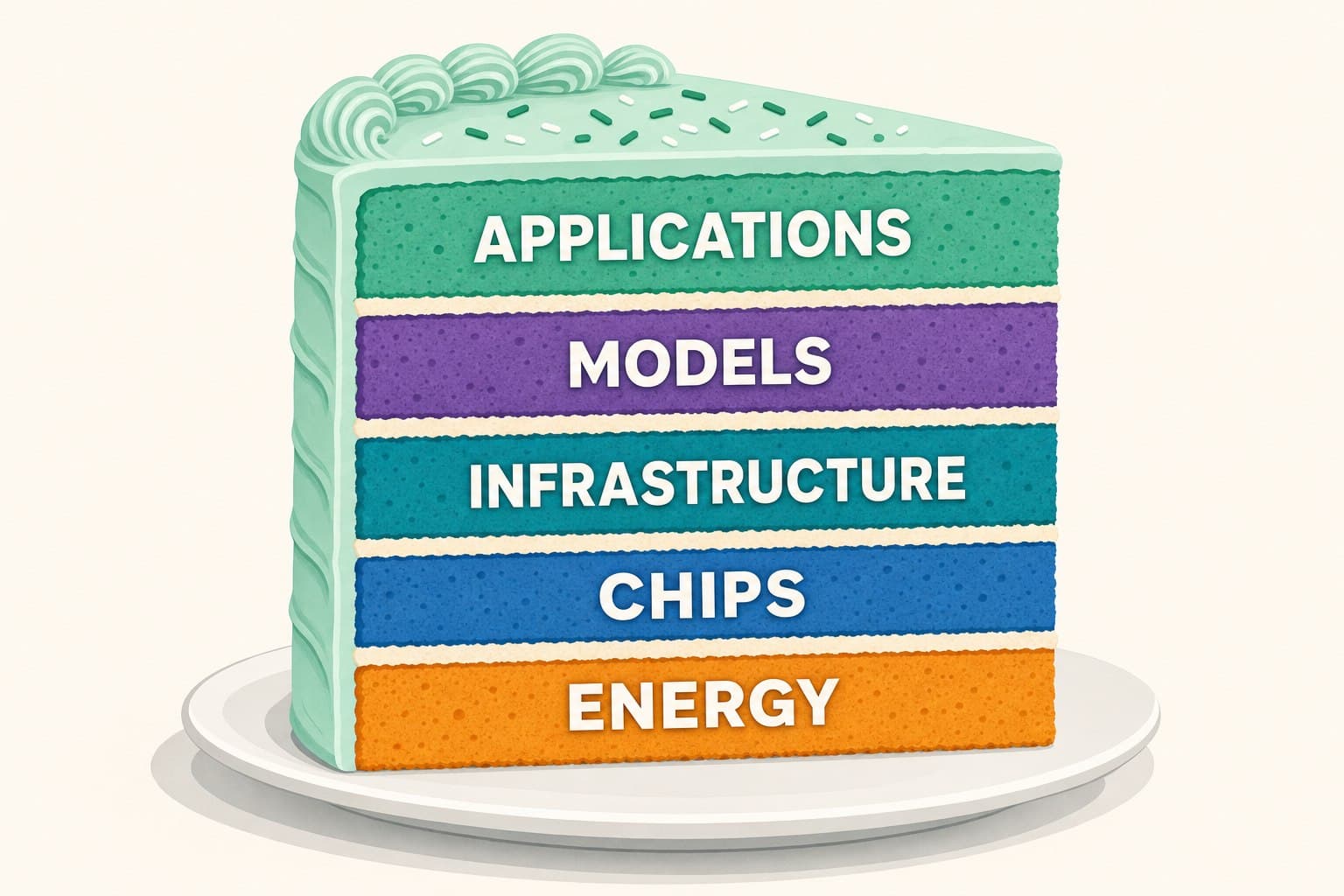
The course ran for nine weeks in the spring of 2026, with about 150 students and ten guest speakers. The structure was built around Jensen Huang's five-layer AI stack model: energy, chips, infrastructure, models, applications.
Agrawal created a table of bullish/bearish views of each speaker - and none were bearish on AI as a whole, only on specific competitors within the stack. NVIDIA received the most consistent praise - in six out of nine sessions, and Brad Gerstner called it a candidate for the first company with a $10 trillion market cap. Physical infrastructure was the second most important topic of the course.
The sharpest analysis came from Ali Ghodsi (Databricks) - about the economics of open source. The gap between open and closed models has shrunk to about three weeks: open models operate "90 days behind the frontier at a price 70-90% lower." Ghodsi called distillation "unstoppable" - products built on tokens cannot protect themselves from copying. He described the business model as a gradual ratchet: increasingly complex requests go to cheap open models until only the frontier model remains profitable.
The main criticism of the course was the lack of depth with only two hours a week. What worked well were small dinners with speakers and the long/short game, which encouraged active note-taking.
https://tailwinds.substack.com/p/what-i-learned-teaching-the-economics
https://t.me/rvnikita_blog/1880
#stanford@rvnikita_blog #ai@rvnikita_blog #apoorv_agrawal@rvnikita_blog #nvidia@rvnikita_blog