I've been thinking about various applications of new LLM models (besides the obvious summarizers, code and text generators, etc.).
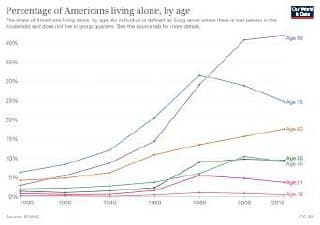
The Yandex team, studying the main use cases for their Alice smart speaker, discovered that besides the understandable questions like “what's the weather today” and “play music or a podcast,” people buy and gift these speakers to their elderly relatives. The main problem for the elderly is the lack of communication. Research shows that starting at age 40, people spend more time alone than with colleagues, partners, friends, and family. Over the years, the situation only worsens.
It seems that AI could help with this issue.
Tasks to be solved:
1. Communication
2. Dementia prevention - the robot can provide and adapt tasks to exercise the brain
3. Safety concerns - monitor the state and report if something is wrong.
Current Alexas, Alisas, and Siris struggle with this task, as they are not architecturally designed for it from the start.
Technically, it is already possible to build the entire product on OpenAI architecture: Whisper (voice2text) + gpt3 (response generation) + Vall-e (text2voice).
Challenges:
1. Latency - current LLM models are very slow and cannot respond in real-time
2. Safety scale - how to ensure that a robot does not push a depressed person further into irreparable consequences? The cost of error is very high.