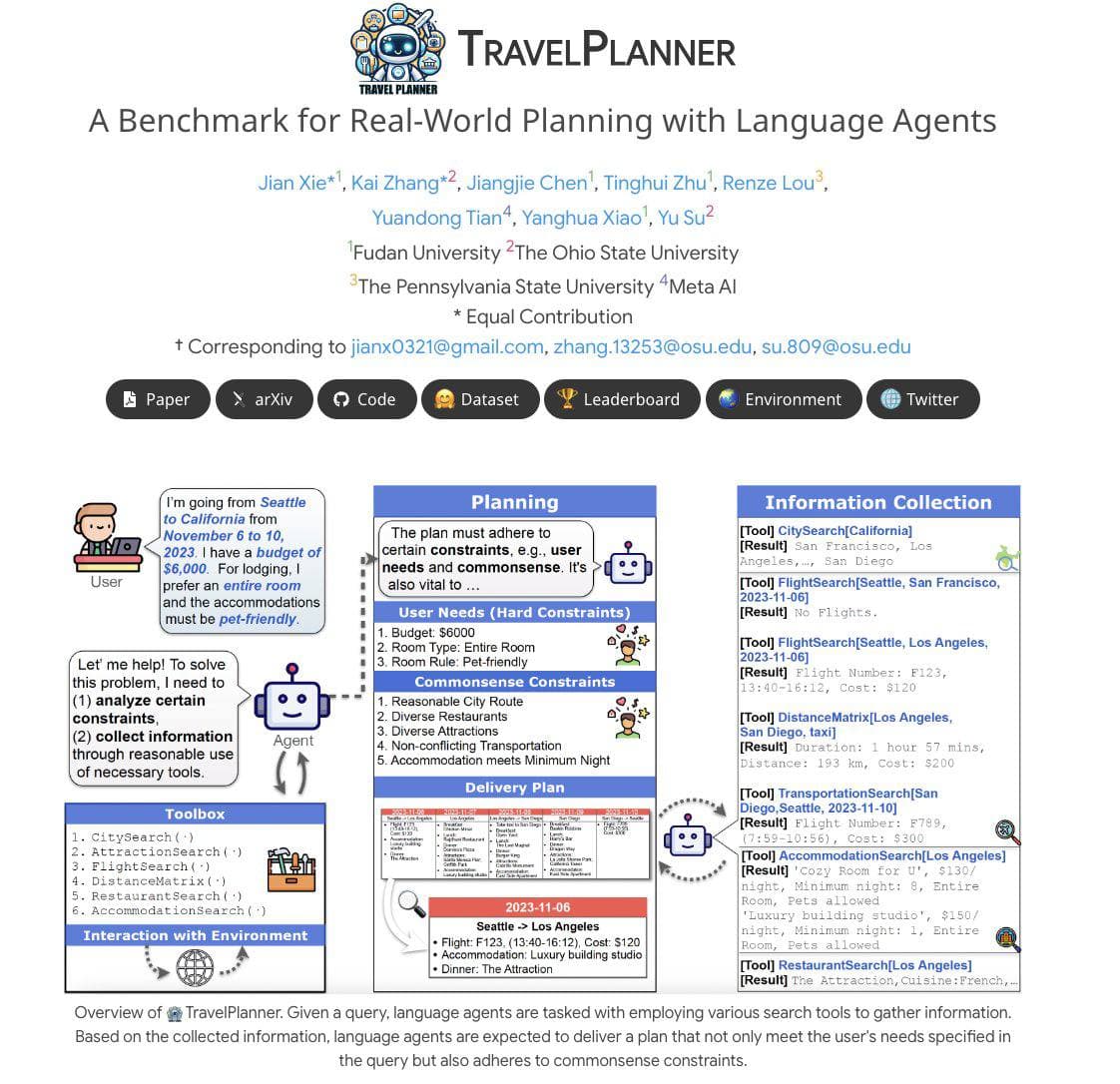
The mathematical complexity of route planning makes it one of the key challenges in artificial intelligence, especially when it comes to travel planning. The task involves not only selecting the optimal path from point A to point B but also considering numerous variables such as cost, travel time, and transfers, as well as additional factors like weather conditions and local events. This is reminiscent of the traveling salesman problem, known for its NP-hardness, making the search for the ideal solution algorithmically complex as the number of destinations increases.
In light of these challenges, the authors of the study proposed TravelPlanner – a benchmark designed to assess the ability of language agents to plan trips. TravelPlanner includes a virtual environment with access to a vast database of nearly four million records and offers 1,225 planning tasks with various requirements and constraints.
Test results, even using advanced language models including GPT-4, show a success rate of only 0.6%. This highlights the complexity of travel planning and reveals the limitations of current AI systems. Such results indicate the need for further research and development in this area.
In conclusion, it is worth noting the significance of developing specialized benchmarks like TravelPlanner, which play a key role in evaluating and comparing AI models. This allows the scientific community to approach the measurement of progress in artificial intelligence more meaningfully, identifying current limitations and uncovering new directions for research. Such an approach not only contributes to a better understanding of the potential and limitations of AI in complex planning tasks but also paves the way for future breakthroughs in this field.