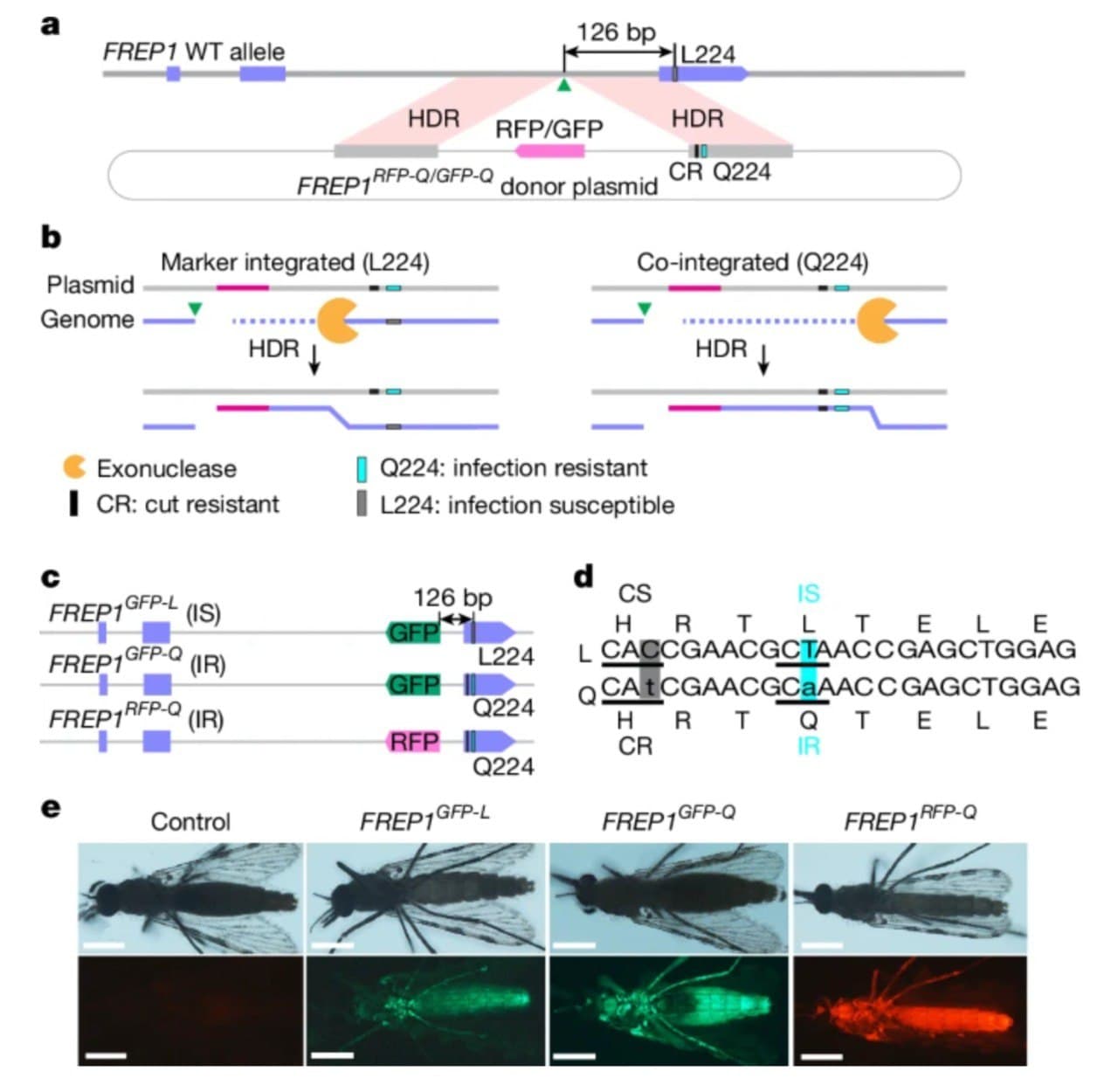
Nature published a study where scientists from UC San Diego and Johns Hopkins introduced a natural protective allele of the FREP1 gene (Q224) into Anopheles stephensi mosquitoes, making the insects nearly immune to malaria. Importantly, this modification does not impair the mosquitoes' viability or fertility. A 'gene drive' cassette was used to rapidly replace wild populations, accelerating the spread of the desired gene version throughout the population.
If this experimental approach is scaled up, it could fundamentally change the fight against malaria: simply make all mosquitoes 'invisible' to the parasite without the need for mass extermination. An alternative to traditional insecticides, to which resistance is already developing.